Pages

Ads 468x60px

Friday, October 19, 2012

Should Linux Take a Lesson From Apple?


The Secure Boot saga may seem like it's been dragging on forever here in the Linux blogosphere, but the truth is that it's a mere babe in Redmond arms compared with the never-ending Apple v. Samsung drama.
It seems safe to say that most FOSS fans are sick to death of hearing about both of them, of course, but recently the always-insightful team over at TuxRadar posed yet another interesting question. Specifically, "What can Linux really steal from Apple?" was the title of thelatest Open Ballot poll posted on the thought-provoking site, and there's no doubt it's provoked a lot of thinking.
"Is it the design aesthetic, or its uncompromising attention to detail?" the TuxRadar team asked. "Or how about its dictatorial approach to development? Or the narrowness of its hardware provision? Or would you like to transplant some of that famous Cupertino idolatry into the free software ecosystem, or simply shroud each Ubuntu release within Steve Jobs' Reality Distortion Field."
More than two dozen comments appeared in short order on the TuxRadar site; unanimity, however, was harder to find.

'Hang On, That's Ubuntu'

To wit: "A respect for design would be nice," suggested Spanwiches.
Alternatively: "Steve Wozniak -- the only innovative thing Apple really had," offered eages.
Then again: "Nothing!" chimed in Willhem Tell. "Linux for me is freedom of choice. It's about diversity. I can switch between distros and desktop managers. For free.
"Appl€ is the exact opposite: it's mind numbing 'eat or die,' no choice and costs money," Willhem Tell added.
And again: "1. App[le] store. 2. Disappearing scrollbars. 3. Pretending that your desktop is actually a tablet," quipped Steve Occupations. "Oh hang on, that's Ubuntu."
When Linux Girl broached the subject down at the blogosphere's Walled Garden Cafe, she immediately got an earful.

'Its Public Relations Department'

"Technologically speaking, there's really nothing that Linux can steal from Apple," opined Google+ blogger Linux Rants, for example. "Usually, it's going the other way. While Apple is held up as a bastion of innovation, it's hard to find a feature that they have that wasn't present in Linux long before they incorporated it.
"Apple doesn't innovate," he added. "They take other people's innovations and add a little spit and polish and call it new."
If there were one thing that Linux could stand to steal from Apple, however, "it would be its Public Relations department," Linux Rants suggested.
"Linux has gotten the reputation as a hobbyists' OS that's hard to install and even harder to use," he explained. "This reputation doesn't sync with reality, but it's hard for Linux users and corporations to sell that to the public. Apple PR could really help in that regard, as they'd actually be able to sell something that was real, instead of claimed innovation that's really just dusted-off, 10-year-old ideas."

'Their Graphic Designers'

Chris Travers, a blogger who works on the LedgerSMB project, saw it differently.
"The one thing Apple shows which many Linux developers have known for some time, is that design matters and that engineering is best directed by small groups," Travers offered. "But we really can't steal that since we've known it for some time.
"So, I guess that means the next best thing: steal some of their graphical designers," he concluded. "But leave their technical designers: design-wise, OS X is more or less very unlike Unix."

'There Isn't a Lot to Take'

Alternatively, "Linux needs to take the hint and make sure common tasks work well rather than just worrying about new features," opined consultant and Slashdot blogger Gerhard Mack. "If the common tasks are easy to do then the whole platform looks better."
Then again, "Apple is primarily a hardware company, and Linux is software," Google+ blogger Kevin O'Brien pointed out. "So there isn't a lot to take, I would think.
"And just in terms of software, Apple is the most freedom-limiting company out there, so I certainly would not want Linux to take that from them," O'Brien added.
Indeed, "from Apple? Nothing," agreed Robin Lim, a lawyer and blogger on Mobile Raptor. "From its grandchild... many versions, with many app stores all hosting compatible apps."

'The World Should Shun Apple'

"Stealing from Apple? No way," exclaimed blogger Robert Pogson. "We are already dependent on them for CUPS, Safari and WebKit, and they show themselves to be patent trolls.
"I remember using Apple's software in schools a decade ago," Pogson added. "They shipped stuff that crashed hourly and had a viscous networking stack. They 'stole' a Unix core, and now they accuse anyone who has rounded corners on anything."
In short, "the world should shun Apple until they show a little bit of humility at least," he concluded.

'Take the Android Approach'

"If you wanna take something from Apple, take making actual money from desktops, laptops, and tablets," Slashdot blogger hairyfeet advised. "Give companies a way to survive while selling Linux so you can build critical mass."
On the other hand, "GNU/Linux is more like a cultural phenomena than a commercial initiative," Google+ blogger Alessandro Ebersol pointed out.
Still, "companies can use it and make it a commercially viable option," he asserted. "How? Take the Google/Android approach: a great OS, with the lowest price possible (free, in many cases) and customize it to the manufacturer's hardware."
It's Android, in fact, that offers the best example for Linux as a whole, Ebersol concluded.
Follow that example and "GNU/Linux will be a killer OS," Ebersol predicted. "The companies can tinker with the OS to make it awesome and then take advantage of the GNU/Linux ecosystem. Then, GNU/Linux can not only compete with Apple, but gain market share from both Apple and Microsoft." 
read more

Twitter Grapples With Wiggly Censorship Line in Germany


Twitter on Thursday blocked tweets from the accounts of a neo-Nazi group that is in violation of German law. The ban is effective only within Germany. This is the first time Twitter has acted on its "country withheld content" policy, which it first announced in January.
Twitter enacted the policy in an effort to balance freedom of expression with compliance with local laws. This is far from the first time that a company has confronted that problem. In 2000, a French court ordered Yahoo to block access in France to auctions that sold Nazi memorabilia.
Since the end of World War II, many nations have adopted laws against the display of Nazi images, including flags, and Germany has banned certain groups. It was last month that the state of Lower Saxony declared the group Besseres Hannover (Better Hannover) illegal, and German authorities requested that the group's Twitter account be shut down.
Instead, Twitter blocked the account's tweets, but only in Germany.
Twitter did not respond to our request for further details.

Has the Censorship Sailed?

The issue here could be a tricky one. On one hand, this could be seen as enforcing efforts to stop hate speech and silence banned organizations -- something that might seem reasonable in this case. However, it could also be viewed as censorship that could, in turn, silence banned groups clamoring for freedom from oppressive regimes.
"Are they crossing the line? According to the laws in Germany, no," Alan Webber, industry analyst and managing partner at the Altimeter Group, told TechNewsWorld. "According to the laws in Germany, this is within the law."
But what does this mean for other countries -- notably those with laws in place designed to silence calls for freedom?
"Twitter has entered a very challenging arena and slippery slope," said Greg Sterling, principal analyst at Sterling Market Research. "Countries around the world have widely varying laws on speech and censorship. Most are not as liberal as the U.S. -- see China, India, the Middle East."

Local Laws, Local Problems

The old environmentalist line of "think global, act local" could also come into play with Internet freedom. In the meantime, though, it seems that corporations such as Yahoo and eBay will likely continue to bow to local laws, and the social networks appear to be doing the same.
Is this something that can be managed and controlled, expecially when blocking whole groups or organizations?
"Twitter could simply take the position that it's going to comply with local laws but then it gets into the thorny area of evaluating the legality or legitimacy of speech in any given context, which is what it has done in Germany," Sterling told TechNewsWorld. "But the volume of messages and the global scale of Twitter's business Free White Paper: Simple Strategies for Enhancing eCommerce Profitability and reach make that a nightmare from a compliance perspective."
The other part of this particular equation is that social networking has enabled greater communication, making enforcement challenging, but also making understanding of the law all the more difficult and convoluted.
"Twitter can't really take the position that it's going to ignore domestic law and impose U.S. law on other countries," Sterling added. "This issue arises because you've got people publishing content in one country and consuming it in another. That's never really been the case with any other medium to the same degree."

What Is the Line Online?

The final piece is what this does suggest about concerns that governments could merely call for censorship. What's the likelihood that Twitter will now comply with calls from Syria, Iran, China, Thailand, and other nations that have imposed harsh restrictions on what people can say or post online?
Part of the problem may be the difficulty of applying physical borders in the virtual world -- if that can even be done at all.
"We still have these very physical borders, and we're not sure how this works in the virtual world," said Altimeter Group's Webber.
"Our laws and policies are not set up to deal with that, and a lot of people realize there is no line anymore," he pointed out.
"The simplest answer is that there is no line -- we don't know how this will play out," Webber said. "This is going to be the big question for the next 10 years."
read more

Tuesday, October 16, 2012

Google to Developers: You Have the Con

Google to Developers: You Have the Con
The new console will help developers navigate the Android app ecosystem with a bit more clarity, said Al Hilwa, program director, applications development software at IDC. "The Android platform is known for being chaotic and not intimately supported by Google," he said. "Clearly Google's a believer in self-service for developers, and they're improving workflows, expanding language and enhancing the analytics."

Google on Monday made its new Android developer console available to devs everywhere on Google Play.
The console was announced at Google I/O in July, and devs were invited to test out a beta version.
"The developer tools and portal are key areas of enablement for any application platform," Al Hilwa, program director, applications development software at IDC, told LinuxInsider. "With the coming launch of Windows Phone 8, which ups the ante in this area, it is not surprising that Google has been investing here."
"Both Android and iOS have been very lacking in providing developers with a proper back channel to know how users are seeing, choosing and ultimately using their apps," Sam Abadir, chief technology officer at appMobi, said. The new console provides Android devs with "some insight" into reviews over time.

The Console's Features

Google has overhauled the interface so users will easily find their way around using navigation and search, and so that it loads quickly even if users have a lot of apps.
The console lets devs track the success of their app over time. It provides a graph showing changes over time for both the all-time average user rating and new user ratings that come in on a certain day.
Devs will be able to break down the data by device, country, language, carrier, Android version and app version.
Google has also revamped and streamlined the app publishing process. Devs can either begin with an Android application package file (APK) or an app name, and can save their work before they have all the information. Devs can also now see the differences between the new and old versions of an app. This lets them catch unintentional changes before publishing a new version of an app.
Once a dev has saved changes to an app in the console, users will be able to see it in any of 49 languages on the Web. Translation is automatic. Google plans to offer this multilanguage capability on mobile devices.
The console does not yet support advanced features such as multiple APK support, APK expansion files, and announcements. Devs will have to switch back to the old version to use these.

Order From Chaos

"The Android platform is known for being chaotic and not intimately supported by Google," IDC's Hilwa said. "Clearly Google's a believer in self-service for developers, and they're improving workflows, expanding language and enhancing the analytics, [which] are all essential for the continued success of the platform in the face of a well-capitalized and serious Microsoft that is hoping to gain more market share in mobile device with Windows Phone 8."
The overall processes for "navigating the tension between freedom and chaos" tops Hilwa's list of the benefits of the new console.
"Since Android supports so many concurrent OS versions running on so many devices, it would be very useful for developers to see what OS versions and devices their apps are being installed and used on," appMobi's Abadir told LinuxInsider. However, he did not see that functionality in the description of the console.
Further, the additional insight into reviews provided by the new console "is really a small step," Abadir continued. "The data developers really need to intelligently improve their apps in the field [include] analytics that track usage patterns, and clickstreams." These features are included in appMobi's HTML 5 mobile app cloud services.

Taking On iOS

The new Android dev console "is an iterative enhancement of the Android developer experience," Abadir stated. "It's not a crucial advance."
Still, "it's well known that Apple's developer dashboards and analytics are extremely lacking, so Google could have seen this area as a place to quietly show developers a better experience," Abadir suggested.

Quieting Restless Devs

Last year, a spate of complaints from Android devs about their not getting fully paid erupted on the Android Market forum.
Several devs pointed out that Google was dogged by payment processing problems. At least three said they weren't getting paid for about half the orders, and another, "davemorrisseyLevel 5," said he wasn't getting paid for Web-based orders.
That led Google to close the Android Market forum to devsand require them to contact it directly with problems.
"Separating forums allows different groups and workflows, and different service level agreements to be applied to the different groups," IDC's Hilwa remarked.
read more

Microsoft Dances Closer to the Set-Top With Xbox Music

Microsoft Dances Closer to the Set-Top With Xbox Music
Microsoft's new Xbox Music service represents one component of the company's effort to fortify its ecosystem. Cable and satellite TV providers -- not just online music service services -- should worry about Xbox Music's debut, noted tech analyst Rob Enderle. Like Apple TV, the Xbox could one day replace traditional cable boxes with alternatives tied to a parent technology.


Microsoft is taking another stab at the digital music industry with the Tuesday launch of Xbox Music, a streaming music service that will be an update to the Xbox. It will also be released as a built-in feature on Windows 8 PCs and tablets later this month.
Xbox Music
Xbox Music lets users listen to music in whatever way -- and on whatever device -- they choose.
Users will be able to stream the service's 30 million tracks for free in an ad-supported version or purchase it at the now ubiquitous price point of 99 US cents per song.
There's also an option to pay $9.99 per month for unlimited cloud-based streaming of music purchases and playlists to any device.
A Microsoft spokesperson was not immediately available to provide further details.

The Post-Zune Era

This, of course, is not Microsoft's first stab at entering the digital music market. There was the Zune brand, now retired after failing to gain much traction.
There are some similarities between Xbox Music and Zune -- both are multichannel services that incorporate the use of other Microsoft products.
Zune included a line of portable media players, digital media player software for Windows, a music subscription service, music and video streaming services for the Xbox 360 game console and the media software for Windows Phone, among other features. It was all discontinued a year ago.

Xbox as Set-Top Box

Xbox Music is clearly different from Zune in some important respects -- and it can be expected to change the Xbox dynamic, Rob Enderle of the Enderle Group told TechNewsWorld.
The Xbox is being positioned as more of a set-top box going forward, he said. Microsoft carved out its identity at first with games and then movies -- and now it is incorporating music into the mix.
In fact, cable providers should be just as worried as other online music providers about Xbox Music. Like Apple TV, it is trying to replace traditional cable boxes with alternatives tied to a parent technology.
"Music has proven relatively easy, and Microsoft leads with games; it is video that remains the bridge too far and both firms are struggling here," said Enderle.

Digital Music Nation

Microsoft has another factor in its favor now with Xbox Music. Digital music has become mainstream, and consumers expect easy access and a smooth experience, said Patrick Reynolds, EVP of marketing for Triton Digital.
"There has never been more interest in or listening to online music," he told TechNewsWorld. The market has become a very big pool, and "there's room for more than one player."
The growing reliance on smartphones for everything is also changing how music is consumed, Enderle noted. "We may find that media services and access will define battles ranging from set-top boxes to smartphones over the next decade."

Table Stakes

In fact, a good music service has become table stakes for both Apple and Microsoft, Enderle said. It will be a critical issue for Google as well, if it is not already.
Google still relies mostly on third parties, he noted. However, "their music service, while not as well known, is actually rather good, being a bit more consumer-focused and a bit less record-label friendly."
In this rapidly shifting environment, can Microsoft make a dent? How the user experience syncs up with the broader environment could be crucial.
"It depends on how baked-in it is to the other aspects of the Xbox environment," said Reynolds. "If the experience is great and seamless and additive to the overall consumer experience, it will work."

read more

Thursday, October 11, 2012

Acer's Windows 8 Tablet Edges Into iPad Turf

Acer's Windows 8 Tablet Edges Into iPad Turf

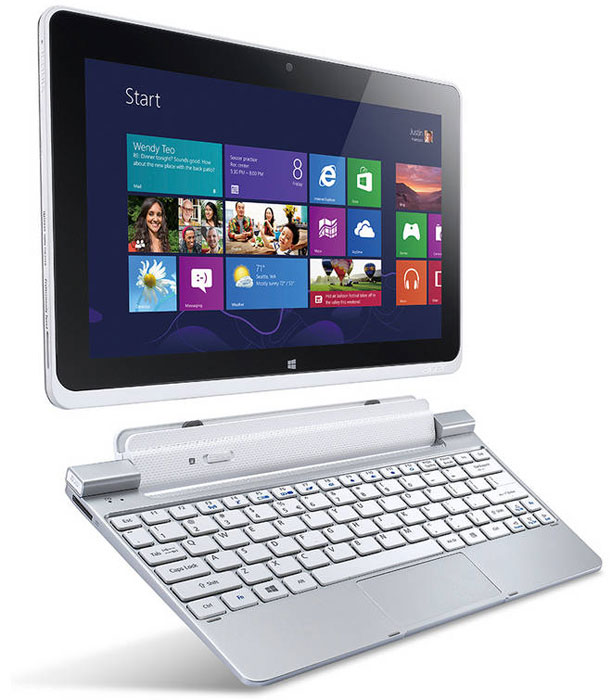
Ramping up for the holiday season, Acer this week announced the Iconia W510 Windows 8 hybrid tablet, just five days after it unveiled the W700 Win 8 tablet PC.
The W510 is offered in four versions -- as a standalone tablet PC with 32 or 64 GB of RAM, with a keyboard dock, or as a full-fledged business Free White Paper: Simple Strategies for Enhancing eCommerce Profitability device running Windows 8 Pro.
Acer Iconia W510 hybrid tablet
The Acer Iconia W510 hybrid tablet
(click image to enlarge)
Prices range from US$499 to $799 and the W510 will be available on Nov. 9.
"Acer has designed its new Windows 8 tablet PC to serve customers who want to maximize productivity and have a first-rate tablet experience," Acer spokesperson Kelly Odle told TechNewsWorld. "The new Iconia W510 provides a versatile environment for customers to stay productive and be entertained."

What It Offers

All four versions of the Iconia W510 run on an Intel Atom Z2760, have a 10.1-inch Gorilla Glass 2 touchscreen with 1366 x 768 resolution and a 16:9 aspect ratio, and have two cameras.
The front camera is a 2 MP device and the rear one an 8 MP device. Both offer 1080 HD audio and video recording. The rear camera has autofocus and LED flash support.
All four have HD audio support, Dolby Home Theater v4 , two built-in speakers and digital microphone, and support 802.11 a/b/g/n, WiFi and Bluetooth 4.0.
The four models all have a Micro-HDMI port, a micro SD card reader port, and a micro USB 2.0 port.
Battery life is up to nine hours for the 32- and 64- GB basic tablets, and up to 18 hours. The other two versions both include the keyboard dock, which has a second battery that provides another roughly 9 hours of life.
The corporate version, running Win 8 Pro, will support enterprise legacy programs and provide security and authentication through theTrusted Platform Module, which is optional, Acer said. It will come with a two-year warranty.
The Iconia W510 weighs 1.27 pounds on its own, and 2.63 pounds with the keyboard dock.

Hitting the Price Point

The basic $500 model will compete directly with the iPad, but "it will be difficult for [Acer] to gain traction at that price point," Julien Blin, a directing analyst at Infonetics, told TechNewsWorld.
"The best way to gain traction is to undercut Apple [by offering the tablet at] $200 to $300, but then Acer would have to compete with Amazon, Google's Nexus 7 and the Nook Color," Blin continued.
Although the top-of-the-line model "will appeal to some business users as Windows 8 is a good fit for the enterprise, I don't think that Windows 8 tablets will drive significant sell-through like the iPad based on the premium price," Blin said. Microsoft "will try to convert" many of their 1.3 billion Windows users to its Win 8 tablets and, while they may not generate significant sell-through at the beginning, "over time it might be different."
It would be best to compare the Iconia 510 to Android tablets rather than the iPad, Jeff Orr, a senior practice director at ABI Research, suggested. "There's Apple and there's the rest of the market, and going against the rest of the market depends on providing a coherent story on why your product is a better choice."
The hybrid form factor is fine because "there's a market for [them]," Infonetics' Blin remarked. "Business users want to use a tablet that's highly portable and lets them be productive on the go with robust B2B features such as virtual private networks, mobile device management and FIPS."
FIPS is the Federal Information Processing Standard, a United States government computer security standard. 
read more

Thinning Out Your Gadget Hoard

Thinning Out Your Gadget Hoard

New iPhone? Now, what to do with the old one, and the one before that?
Wondering what to do with the old, redundant gear spilling out of drawers, relegating your automobile to the driveway or street?
Step 1: Gather It Up
Collect all of the household electronics that are no longer being used and place the smaller items, with chargers and any peripherals, into a clear zip-style kitchen bag.
Look for phones and games in particular. They can be the mother lode.
Then place the bag in a dedicated obsolete gadget box. A purchased plastic box from a superstore works better than cardboard. It gives the project a semblance of seriousness -- it's a revenue-producing project rather than just another box full of junk.

Step 2: Make a List

Inventory and identify what you've got.
You can consider certain obsolete technologies redundant e-waste -- valueless, unsaleable and never to be used again. They include anything where technology has been superseded rather than just improved.
For example, e-waste includes the heat-creating, eco-unfriendly bulk of a Cathode Ray Tube (CRT) computer monitor.
In-demand, valued electronics genres:
  • anything gaming-related, including consoles, software and accessories;
  • DVD and Blu-ray discs and players;
  • computing tech, including anything with an edge -- for example, a wireless mouse but not a wired mouse;
  • phones and accessories;
  • general small electronics, including anything photography-related, memory cards, GPS devices;
  • big stuff like monitors, projectors and televisions a long as they're current; and
  • music.
Tip: Items that are being replaced by electronic versions have some value, including some books and CDs.

Step 3: Establish Priorities

Decide how much time you want to spend on this project. There's a correlation between time and income.
Start with small electronics -- the least time consuming and most profitable. They are easy to get rid of and will pay for your time.
For example, I sold an unlocked, used Palm Treo smartphone to online electronics exchange and buyer CeX for US$23 earlier this year. I paid for the postage, so netted around $20.
Examples of high-value items CeX has a market for, according to its website last Friday, are the black Apple iPhone 4S with 16 GB of memory on the Sprint network. They will pay you $230 or exchange for $276.
They'll pay you $492 for a used Canon EOS 7D 18 Megapixel camera body only or give you $591 in exchange credit.
Larger electronics and white goods appliances taking up space can be sold via local community moderated, free online classifieds like Craigslist.
Alternative electronics markets include auction websites like eBay. Along with the CeX iPhone listing, I saw a similarly specified, used black Apple iPhone 4S with 16 GB of memory on eBay with case, selling for $285, and the buyer paid shipping.
Auction websites are more time-consuming than online buyers like CeX, but in the case of the auction websites you can make more money.
Tip: Look for store credit, or buyback schemes at the device manufacturer or mobile network's website.

Step 4: Take Out the Trash

This is not a time to get sentimental, particularly if your residential square footage is low and your rent or mortgage is high.
Ask yourself if you intend to launch the Museum of Obsolete Computer Displays sometime in the next 20 years.
No? Then one of the good places to offload gear you haven't been able to sell is retailer Best Buy, which accepts nearly everything small and electronic. It will remove larger items for free, under certain circumstances, with a delivery.
There are in-store drop bins at Staples and Radio Shack stores among others.
Curbside waste haulers can often pickup major appliances if you call them, but they may charge.
Your local municipality may hold free e-waste collection events, but those events may not accept major appliances.
Looking toward the future -- this is becoming a major industry. Look for ATMs and kiosks that pay cash for gadgets in malls sometime soon.

Want to Ask a Tech Question?

Is there a piece of tech you'd like to know how to operate properly? Is there a gadget that's got you confounded? Please send your tech questions to me, and I'll try to answer as many as possible in this column.
read more

Friday, October 5, 2012

Thanjai suresh


read more